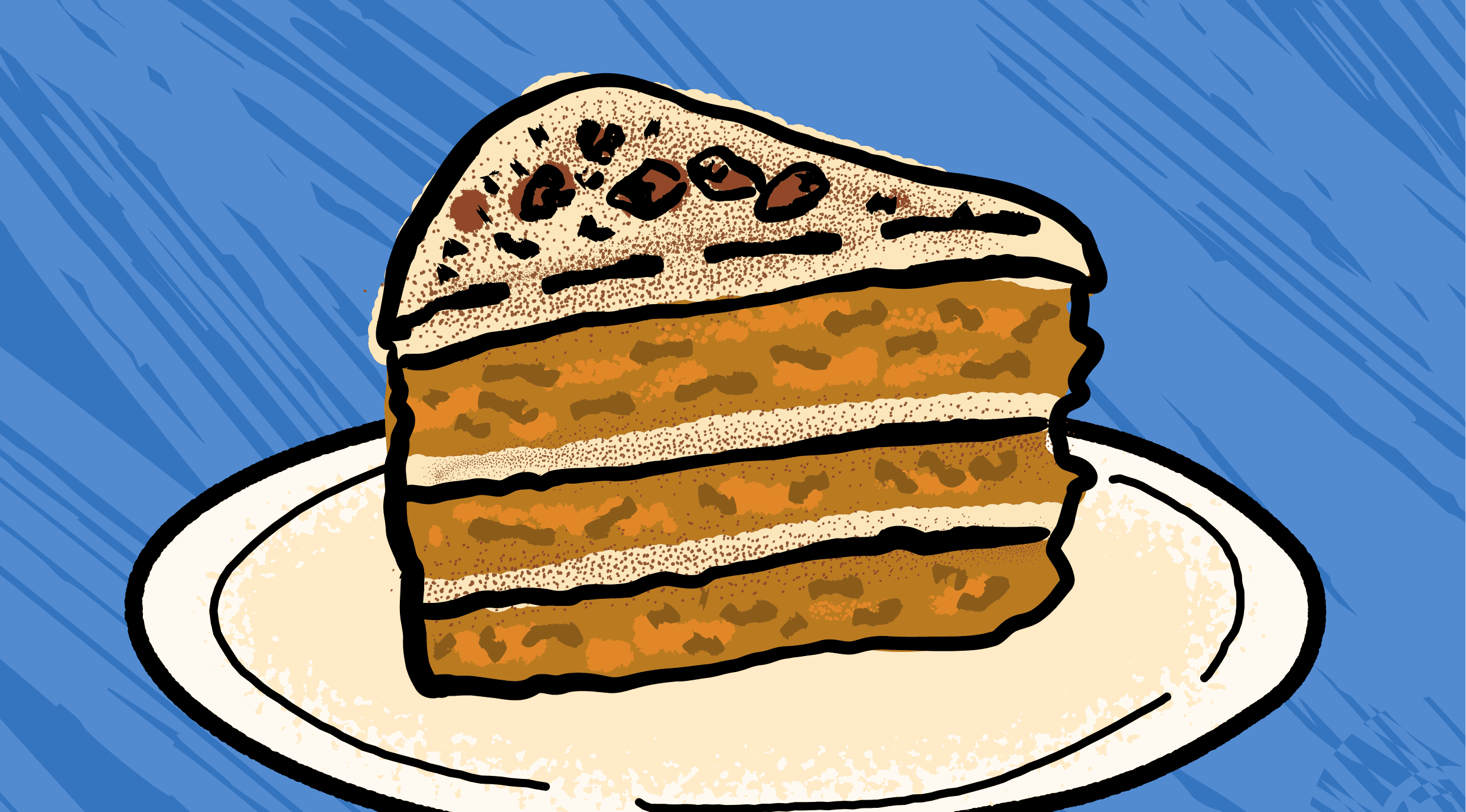
Carrot Pecan Cake
Isaiah declared this the best cake he’s ever had. It’s Claire Saffitz’s recipe, finished with pecans on top.
Ingredients
1 1/2 cups pecan or walnut pieces and/or halves (5.3 oz/ 150g)
Neutral oil for the pans
1 pound (454g) carrots (about 5 large), coarsely grated (about 3 cups)
1 cup buttermilk, (8.5 oz / 240g), at room temperature
1 tablespoon finely grated fresh ginger
2 teaspoons vanilla extract
2 1/2 cups all-purpose flour (11.4 oz /325g)
2 1/2 teaspoons ground cinnamon
2 teaspoons baking powder (0.28 oz/ 8g)
2 teaspoons Diamond Crystal kosher salt (0.21 oz / 6g)
1 teaspoon baking soda (0.21 oz / 6 g)
1 teaspoon ground ginger
1/4 teaspoon ground cloves
4 large eggs (7 oz / 200g), at room temperature
3/4 cup granulated sugar (5.3 oz / 150g)
3/4 cup packed dark brown sugar (5.3 oz / 150g)
1 cup neutral oil, such as vegetable or grapeseed (8 oz / 226g)
Classic Cream Cheese Frosting, Brown Butter Variation
Method
Preheat the oven and toast the walnuts: Place two oven racks in the upper and lower thirds of the oven and preheat to 350°F (175°C).
Spread the walnuts (or pecans, if you prefer) on a small baking sheet and bake on the lower rack, shaking the pan halfway through, until the nuts are deep golden brown and fragrant, about 8–10 minutes. Remove from the oven and let cool.
Prepare the pans: Lightly brush the bottoms and sides of the three cake pans with oil. Line the bottoms with rounds of parchment paper, then set the pans aside.
Mix the wet ingredients:In a medium bowl, mix together the grated carrots, buttermilk, fresh ginger, and vanilla until well combined. Set aside.
Crush the walnuts: Put about two-thirds of the cooled walnuts into a resealable plastic bag and press out the air before sealing. Use a rolling pin to gently beat the nuts, breaking them into smaller pieces. Open the bag, transfer the chopped nuts to a small bowl, and set aside.
Place the remaining walnuts in the same bag, seal it, and beat thoroughly with the rolling pin to crush them into a coarse nut meal. Transfer this nut meal to a medium bowl.
Mix the dry ingredients: In the medium bowl with the nut meal, add the flour, cinnamon, baking powder, salt, baking soda, ground ginger, and cloves. Whisk everything together until well combined, then set aside.
Beat the eggs and sugar to ribbon: In a stand mixer fitted with the whisk attachment, combine the eggs with both the granulated and brown sugars. Start beating on medium-low to break up the eggs, then increase to medium-high and continue until the mixture falls from the whisk in a slowly dissolving ribbon back into the bowl, about 4 minutes.
Stream in the oil: With the mixer running on medium-high, slowly drizzle in the oil, taking care to stream it in gradually, until the mixture is smooth and fully emulsified.
Alternate the dry and wet ingredients: Switch the whisk for the paddle attachment. Add about one-third of the flour mixture and mix on low speed until it’s nearly absorbed. Scrape in half of the carrot mixture and mix just until combined, then add the remaining flour in two additions, alternating with the rest of the carrot mixture. Once the last traces of flour are incorporated, stop the mixer and remove the bowl. Use a spatula to scrape down the sides, then fold the batter several times to ensure it’s evenly mixed. Finally, fold in the pecan pieces.
Fill the pans and bake the layers: Divide the batter evenly among the three prepared cake pans. If you have a scale, weigh out about 1 lb 5 oz (595 g) per pan. Place the pans in the oven, putting two on the upper rack and one on the lower rack, staggered so the pan below doesn’t have another pan directly above it.
Bake until the cakes feel springy in the center and a cake tester or toothpick inserted in the middle comes out clean, about 25–30 minutes. After 20 minutes, switch the racks and rotate the pans front to back for even baking.
Cool the cakes: Take the cakes out of the oven and let them cool completely in the pans. Run a small offset spatula or paring knife around the edges to loosen them. Invert each cake onto a wire rack and carefully peel off the parchment paper. Then reinvert onto another rack, cutting board, or plate.
Stack and frost the cake: Place one cake layer upside down on a cake round, serving plate, or cake stand. Slide strips of parchment partially under and around the cake to protect it while frosting. Using a small offset spatula, spread about 1 cup (240 mL) of frosting evenly across the surface, working all the way to the edges.
Place the second layer upside down on top, centering it and pressing gently to level. Spread another 1 cup (240 mL) of frosting. Add the third layer upside down and press gently. Cover the top and sides of the entire cake with 1½ cups (360 mL) of frosting in a thin, even layer—this is the “crumb coat,” a base layer of frosting, so it doesn’t need to be perfect. Refrigerate the cake until the frosting firms, about 10–15 minutes.
Finally, frost the entire cake with a generous layer of frosting. Chill the cake just until the frosting sets, another 10–15 minutes.
Serve: Carefully slide the parchment strips out from underneath the cake before cutting it into slices.
For the Brown Butter Cream Cheese Frosting:
Brown the butter: In a medium saucepan over medium heat, cook the butter, stirring frequently, and scraping the bottom and sides with a heatproof spatula, until the sizzling subsides, the butter begins to foam, and the milk solids turn golden brown, about 6–8 minutes.
Scrape the browned butter and all the toasted bits into the bowl of a stand mixer and set aside to cool completely and solidify. You can stir it over an ice bath to speed up the process, but be careful not to let the butter harden.
Make the frosting: In a stand mixer fitted with the paddle attachment, or using a hand mixer, beat the cooled brown butter and cream cheese on medium-high, stopping occasionally to scrape down the sides of the bowl, until the mixture is completely smooth.
Turn off the mixer and add the salt along with all of the powdered sugar. Pulse on low a few times to incorporate, then increase to medium-high, scraping down the sides once or twice, until the frosting is thick, light, and very smooth, about 1 minute. Beat in the vanilla. Your frosting is now ready to use.